
September 2012 | Przegląd Piekarski i Cukierniczy (Baking and Confectionery Review)
There are two key areas of quality management: control and the philosophy of work.
For a company in the catering trade to be successful, three factors must be fulfilled: quality, quality and quality. Cafés and confectioners’ shops usually have a prestigious character; there is no room here for shoddiness and makeshift solutions. The basis of their development is quality, which in our trade, combined with a good location, translates into profit.
The concept of quality
Is quality the level of services meeting customers’ requirements? Unfortunately customers may have various requirements, and meeting them may not be the same thing as assuring quality; it is therefore purposeful to indicate which requirements are meant.
1. The basic standard. To begin with, the customer expects a basic standard. The dessert must be properly served (in the case of ice cream, at the proper temperature) by pleasant, professional staff. In the TQM quality management methodology this is the „must be” level. A standard is a need which the customer expects intuitively; they do not even allow that it could be otherwise.
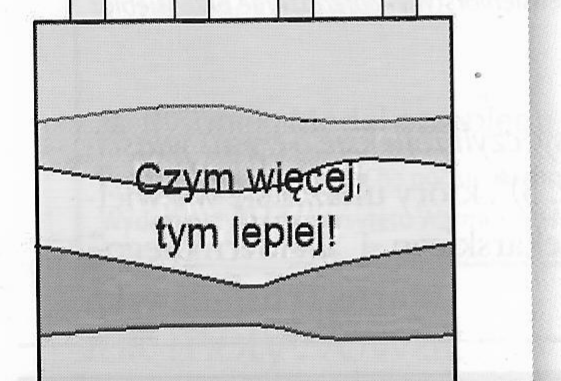
2. „The more the better”. The customer assumes that they will get a large portion, assumes that the waiter will smile and that in the café there will be a pleasant, homely atmosphere, and above all that the taste of the dish will be a real culinary adventure. The more of this good, the higher the level of customer satisfaction.
3. The highest threshold of quality – „excitement”. It is evoked in the customer by something pleasant and surprising. Reaching the threshold of excitement is not difficult and costs the least; it also brings relatively the most benefits – on condition, however, that the needs in the two earlier areas are satisfied to perfection.
W-MOSZCZYNSKI ppic 9-12The process of managing the quality of catering production and sales usually comes down to concentrating on the second threshold, since the first and the third can be realised easily and relatively cheaply; the second requires knowledge, experience, detailed analyses, calculations and an excellent organisation of work.
How much does perfection cost?
It is no great feat to achieve perfection at any price; the feat is to assure excellence without incurring high costs. Everything costs: better raw materials, napkins, a nicer decor, more waiters. Higher costs push up prices. Will the customer accept them?
It is commonly held that higher quality has to cost, that higher expenditure means higher prices, that higher prices mean fewer customers, and therefore that expenditure on raising quality cannot pay for itself. The conclusion: quality does not pay.
TQM in a café?
And now let us look at another philosophy, which reached us in the 1960s from Japan (see the box). In the process of industrial production, excellence has its source in the design process, in the scale of production, in statistics.
The result of high quality is efficiency, understood as the ratio of results to inputs. If the results in relation to the inputs are low, then efficiency is low. If the improvement of efficiency takes place through the introduction of costly automation, the inputs grow – and what about efficiency? It often remains at the same level.
In introducing innovations, scale is of secondary importance: changes in the sales process in a greengrocer’s shop may be efficient, and changes in car production inefficient.
The methodology of control
One of the principles of TQM says: „What is measurable is manageable”. The foundation of management is information. One should, however, repeat after the creator of the Six Sigma method, Edward Deming: one should not carry out mass measurements of the quality of finished products – that is not the point. The point is to measure what is important to us during the production process.
The final product will be perfect if everything which makes up the process of its manufacture is perfect. In every company (organisation) there are many standard measurements useful for the purposes of TQM quality management. An example: in every café, bakery and confectioner’s shop there is a system of recording costs serving tax purposes, called the chart of accounts. A skilful analysis of the accounting accounts, the introduction of new elements such as the place where costs arise, or the expansion of the functional arrangement, may supply valuable information.
The key to quality is a skilful analysis and the drawing of conclusions from constant observation. On the basis of numerical data on the range of raw material consumption, the level of temperatures in the oven and the level of rejects, one can find the causal relationships of various unfavourable phenomena.
Raising the rank of measurement in the production process leads to raising the awareness and the discipline of the people connected with it. This results in an exchange of observations (what is measurable becomes a subject of conversation) and automatically in a striving for perfection. Every person by nature wants to work well and efficiently.
For example, keeping warehouse management is relatively expensive and burdensome; on the other hand, leaving 30% of the company’s costs without control means leaving 30% of the process in a state of imperfection. A process is perfect when everything in it is perfect.
One should not choose suppliers solely on the basis of the price criterion (one of Deming’s TQM principles).
This obvious principle is usually very rarely applied. The majority of production managers are settled with on the basis of the level of the cost of raw material consumption. Consumption norms are set, along with management by objectives and indicators of budget execution. Unfortunately, the most important element is missing from this system: quality for the customer.
The philosophy of work
An employee cares about quality when they have satisfaction from their work; this need not be directly connected with remuneration. Contrary to common opinions, a person does not work solely for money, but has an elaborate system of values, among which the need to achieve satisfaction, stability and respect within the group predominates. The phenomenon of harmonious cooperation in a team, common in the Far East, is in Poland too often displaced by programmes of rivalry and competition.
The majority of the 14 principles of the creator of Six Sigma quality management, Edward Deming, call for the rejection of the concept of management by objectives and of the artificial evoking of fear and of the will to fight among employees. The philosophy of quality excludes rivalry and promotes cooperation and mutual respect. It is therefore worth asking oneself the question: which costs more – inaction and struggling with everyday trifles, or moving up to a higher level of awareness?
Wojciech Moszczyński
What is TQM?
Total Quality Management, TQM for short, is translated as „Kompleksowe Zarządzanie Jakością” [„Comprehensive Quality Management”]. The TQM methodology was developed at the beginning of the 1930s by the American scholars Edward Deming and Joseph Juran. On a large scale it was implemented for the first time at the TOYOTA plants after the Second World War.
The essence of the TQM concept is the assumption that all the processes in an enterprise and in its environment have an influence on the quality of the final products and services, and that therefore in every process of activity one should strive for perfection. The starting point in the TQM concept is the definition of those features of the product or service which are regarded by the customer as the most important for quality.
These features are adopted in the enterprise as goals and are realised with the full involvement of the employees and the management. In the TQM approach the principle of teamwork is cultivated, in which the most important aspect is the exchange of experience.
Wojciech Moszczyński — graduate of the Department of Econometrics and Statistics of Nicolaus Copernicus University in Toruń; specialist in econometrics, finance, data science, and management accounting. He specializes in the optimization of production and logistics processes. He conducts research in the area of the development and application of artificial intelligence. For years he has been engaged in the popularization of machine learning and data science in business environments.
Dodaj komentarz