
April 2022 | Przegląd Piekarski i Cukierniczy (Baking and Confectionery Review)
The application of memes in creating desired behaviour among bakery customers
At present recipients are flooded with an excess of information and stimuli. The time of sensitivity to the exposure of information has shortened considerably. In order for a recipient to decide to accept it, they have to have hope of a reward. In other words, in order for a reader, listener or observer to make the effort of receiving information, there must be a high probability that it will pay off for them. There are various forms of conveying information, and they depend on the area they concern. Long texts containing a countless number of definitions, difficult words and footnotes are the domain of academic circles. Expert circles and politically engaged circles will require a form which will contain analytical reasoning ending in conclusions. These texts therefore aim to convince readers of certain defined arguments, which are a kind of reward for readers who have decided to make the effort of getting to know the analysis.
What are memes?
On the other side of the range of forms of communication are memes. These are messages which are extremely simple in their form. Memes are a form of commonly known short stories, videos or humorously captioned photographs. It is practically impossible to pass them by indifferently. This happens because memes are usually funny and short. So there is a high level of probability of reward combined with low effort. Memes have the task of conveying certain suggestions which, in the long perspective, may shape defined behaviours among readers.
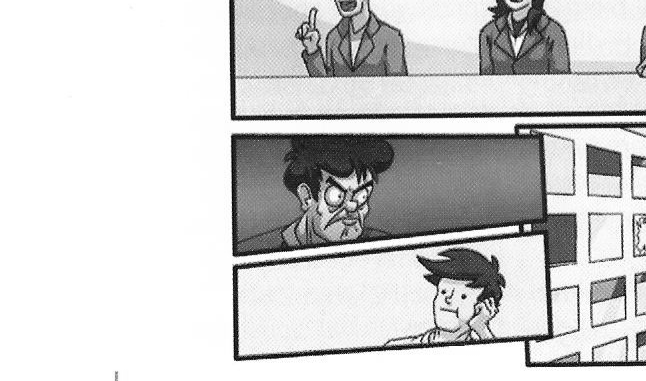
Meme no. 1: „Shall we take out a subscription to Przegląd Piekarski i Cukierniczy?”
W-MOSZCZYNSKI ppic 4-22Reaching the recipient
Everyone who has tried to reach end customers knows that this is very difficult and thankless work. Recipients have a kind of barrier which isolates them from new information and stimuli which have no significance in their everyday life.
How many times, on the way to work, have we passed a huge advertisement? If someone asked us today what was on that advertisement, we would not be able to answer. On the radio and television there appear a great many announcements, offers of things we already have and do not want. In marketing engineering a defined advertisement is addressed exclusively to interested persons. In other words, someone who advertises fireplaces knows that this advertisement is directed at a narrow group of recipients. For people living in blocks of flats it is purely informational noise. The decision to actively listen to this advertisement will be taken only by those who intend to install a fireplace.
Building new customer needs
A very important element of marketing engineering is methods of creating new needs. A classic example is the creation of the figure of Santa Claus. Not everyone knows that this figure, in the commonly encountered form and colour scheme, was designed by Haddon Sundblom, an illustrator from the D’Arcy advertising agency, which in 1931 was carrying out a commission for Coca-Cola. The aim of the programme was to promote the drinks in winter under the slogan: „Thirst knows no season”. Coca-Cola was struggling with an enormous problem of the seasonality of sales; nobody bought refreshing drinks in the middle of winter.
Let us note that memes were chosen to promote the „new” Santa Claus. These memes are also common today. We see Santa Claus rummaging in the fridge, skiing, or sitting astride a chimney. This is a very simple message which requires no effort from the recipient and gives them a little joy.
Meme no. 2: „We forgot the bread, let’s go to the bakery! It’ll be closer to the supermarket!” / „The confectioner’s shop is closed tomorrow!”
In the confectionery trade there are many products burdened with high seasonality. This is an unfavourable phenomenon for production and storage. Such products are, for example, doughnuts or ice cream. As can be seen, it was possible, by means of memes, to create among consumers the need to buy cold, carbonated drinks in the middle of winter.
How does one create one’s own memes?
A meme is the dreamed-of form of reaching recipients, sought after by readers. This applies especially to jokes connected with what they know — that is, the local environment. In order to create one’s own meme, one has to go to one of the meme generators. One of them is Imgflip (https://imgflip.com/). One can create one’s own memes there very simply. Excellent places for spreading them are local Facebook pages, such as „Brwinów wspólne sprawy” [„Brwinów common affairs”] or „Miłośnicy osiedla Parkowa” [„Lovers of the Parkowa housing estate”]. Usually good memes are spread en masse, and their life in the media is counted in years.
Aspects
Memes should always carry a positive emotional charge. On the network one can find a countless number of memes mocking politicians. According to research conducted at the Faculty of Polish Studies of the University of Warsaw, content containing a negative emotional charge is accepted mostly only in nationwide debate.¹ In local debate, such content is rather negatively received by recipients. This means that any attempts to mock someone in the local environment by means of memes may meet with the opposite effect. The content of memes should be very subtle, because that is what their humorous message rests on. A joke most often arises when the content is some kind of surprise or analogy. Through memes it is very easy to shape certain patterns of behaviour. Directly inviting customers to our bakery may meet with indifference. Doing this in a jocular way, as shown in memes no. 2 and 3, may over a longer period produce certain, expected behaviours in customers.
Memes can also be an element of self-irony. This is an excellent way of showing one’s weaknesses and thereby gaining customers’ sympathy. Such a form is presented in meme no. 4. Subconsciously we convey that we are as good as Achilles and Samson.
Wojciech Moszczyński
1. What remains on the network after a debate? An attempt at analysing memes published after pre-election debates, Dr Agnieszka Szurek, in (ed.) Agnieszka Budzyńska-Daca, „20 Years of Polish Televised Pre-election Debates”, University of Warsaw Polish Studies Publishing House, Warsaw 2016, pp. 215–242.
Wojciech Moszczyński — graduate of the Department of Econometrics and Statistics of Nicolaus Copernicus University in Toruń; specialist in econometrics, finance, data science, and management accounting. He specializes in the optimization of production and logistics processes. He conducts research in the area of the development and application of artificial intelligence. For years he has been engaged in the popularization of machine learning and data science in business environments.
Dodaj komentarz